
Furnishing and apparel Comfort and quality
Yarns for furnishing
and apparel
Quote within 24 business hours
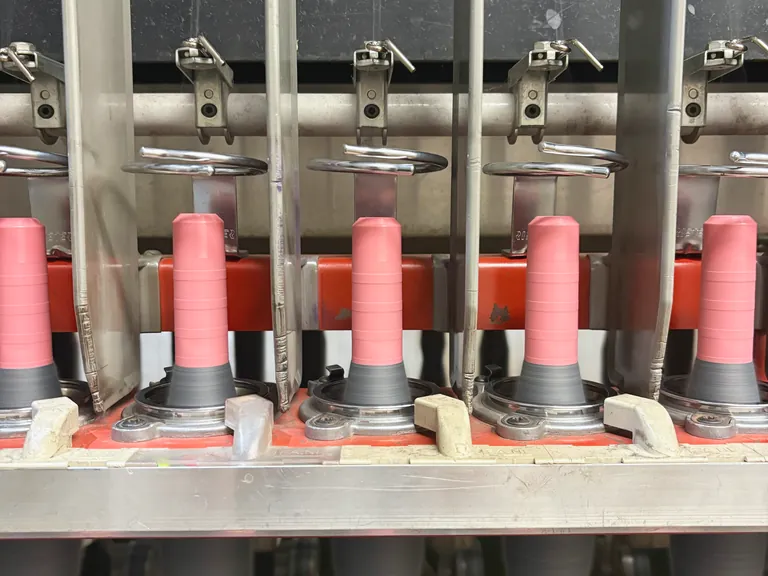
A seat, a mattress, an everyday garment and a sports jersey do not serve the same function. Yet they place the same demand on the material: it touches the skin, and it has to stay pleasant through wash after wash. In Saint-Joseph-de-Beauce, Quebec, Régitex produces the yarns that go into these textiles, for weaving and knitting companies.
From one order to the next, everything can change: the fibre, the colour, the yarn size, the volume. Most of the coloured fibres spun at Régitex are solution-dyed: the dye is incorporated into the fibre as it is produced, rather than applied to its surface afterward. The analysis service examines materials before they enter production. Your quote goes out within 24 business hours, and a run starts at 2,000 lb.
Quote within 24 business hours · Orders from 2,000 lb · Spun in Quebec since 1998
Which products use Régitex yarns?
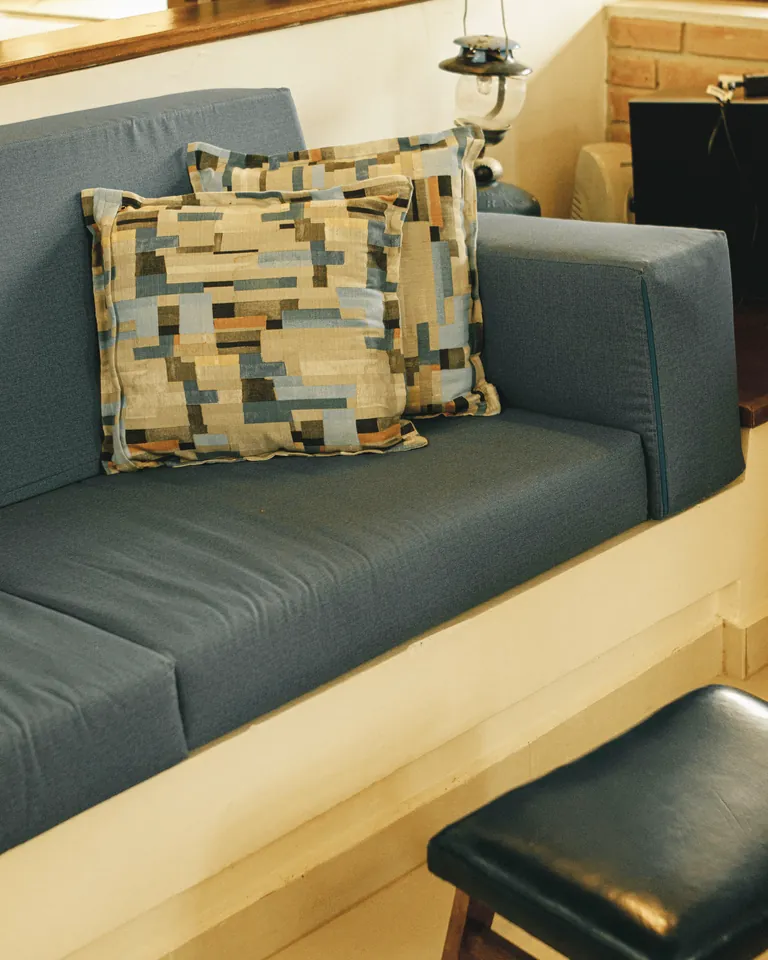
Four product families, from furniture to mattresses. Régitex’s customers are weaving and knitting companies: the finished product can carry their brand, and the material is in the layer the person touches.
For the outdoors and the home, finished products range from outdoor furniture to curtains, awnings and tarpaulins. The properties sought on these products are resistance to UV, moisture, abrasion, flame and, in some cases, an antimicrobial property.
Furniture
Covering and padding fabrics.
Fashion
Everyday clothing and accessories.
Sportswear
Technical clothing and equipment.
Mattresses
Mattress textiles.
The same mill serves all four. A mattress maker and a sportswear brand do not order the same product, but they deal with the same team, in the same plant.
Which properties matter in a yarn that touches the skin?
In these markets, the material has to hold up in everyday use: hand, meaning how the textile feels to the touch, thermal behaviour, how it holds up through washing, and a colour that does not shift. These properties are determined first by the choice of fibre and blend, then by the process.
Natural, artificial or synthetic: where does the fibre come from?
Natural fibres come directly from a plant or an animal, such as cotton, flax or wool. Artificial fibres also start from a natural material, wood cellulose, which is dissolved and reformed into filament by a chemical process: this is the case for viscose, modal and lyocell. Synthetic fibres, such as polyester, are made entirely by chemical synthesis, most often from petroleum derivatives.
The fibre is chosen with your teams, based on the property sought in the finished product. Blending then adjusts the proportions of several fibres to reach the right balance. Depending on the application, recycled fibres from specialized suppliers can also be incorporated, in a proportion set case by case. The three fibre families are described in detail on the Technical information page.
Some branded fibres also provide targeted properties: thermoregulation, moisture management or the softness specific to cellulosic fibres.
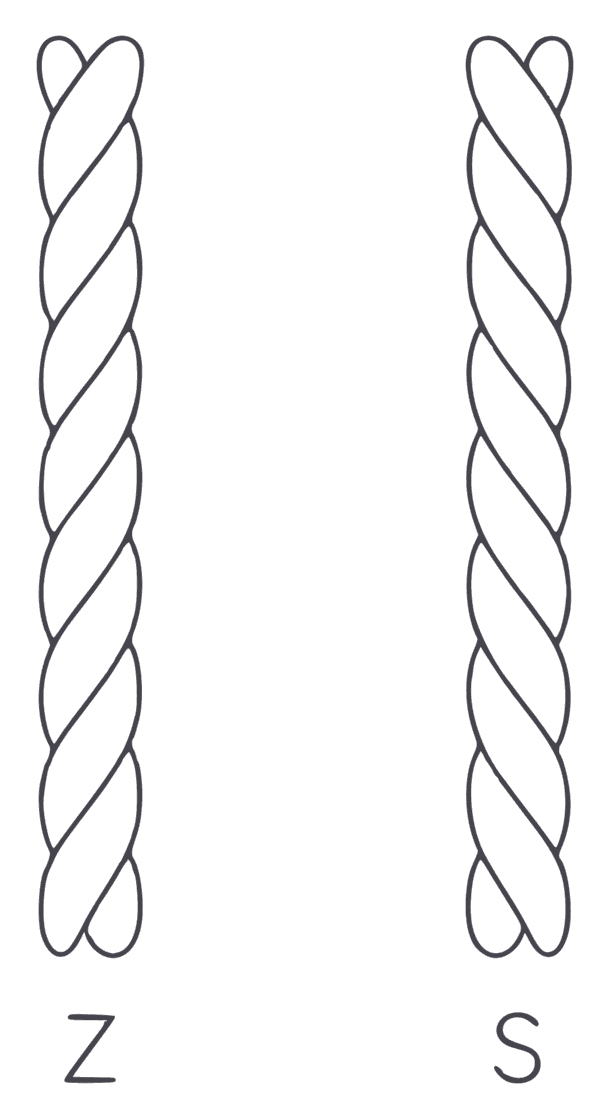
How the product is built. Two processes coexist under the same roof: ring spinning (ring spun), Régitex’s main area of expertise, and open-end spinning (open-end). Yarns come out single or plied, with 2 to 4 plies. The process is chosen with your teams, based on the result targeted in the finished product. The twist is set by Régitex.
Compare the two spinning processes
Colour, analysis, threshold and carbon footprint
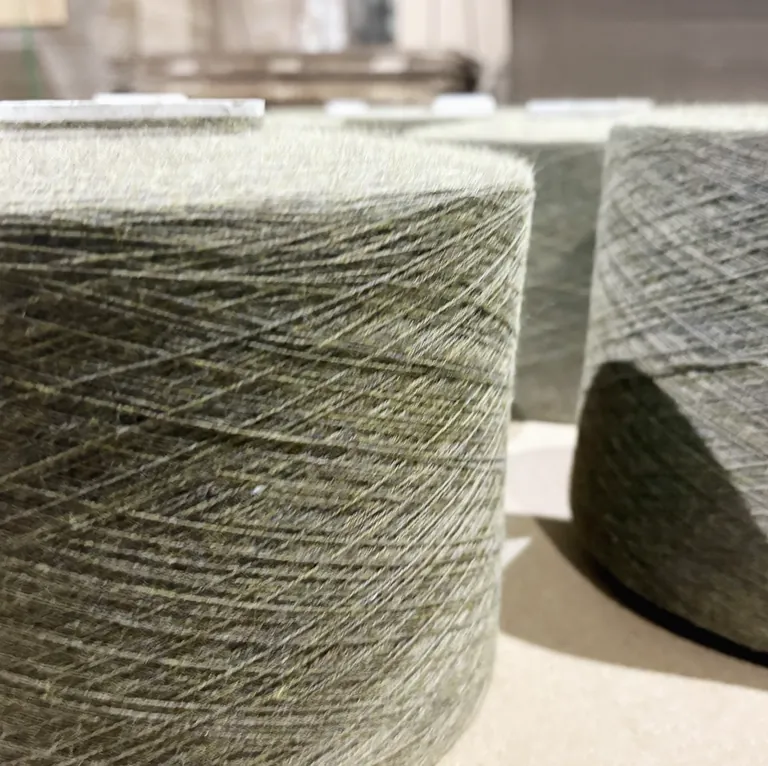
Colour blending in-house. Most of the coloured fibres Régitex spins are solution-dyed, and the requested shade is created by blending these fibres at the opening and blending stage.
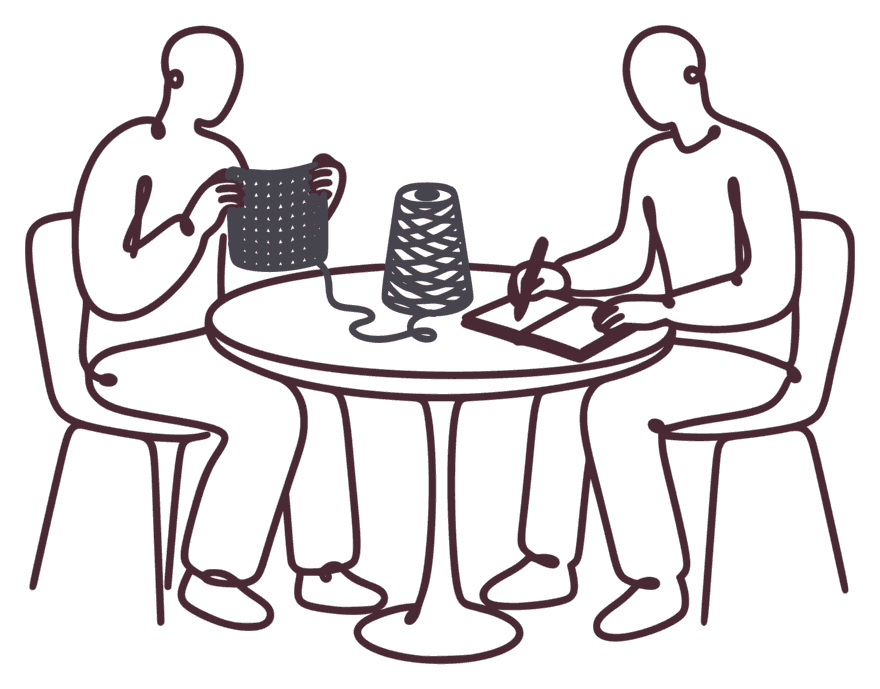
The analysis service. The analysis service examines the materials and yarns that go into your program before production. The team also advises your operators on machine settings. Cone winding gets the same care as the material: a poorly wound cone costs you in machine stoppages.
An accessible minimum order. A furniture company, a mattress maker and a sports brand have neither the same volumes nor the same production cycles. Yet each of them can order from 2,000 lb, enough to test a new material or a new colour without committing to a full production run.
The carbon footprint, order by order. We provide the carbon footprint of your order dynamically, a practice still uncommon in our industry. Nearly 90% of an order’s greenhouse gas emissions come from the fibre itself (within 5 percentage points): the material you choose with Régitex is therefore also a footprint choice.
Blends and colours, in detail
Which fibre blends do you spin for furnishing?
We spin acrylic and polyester, among others, as well as blends of cotton and acrylic, polyester and linen, or viscose and linen. The fibre families are described on the Technical information page.
How do you check colour from one production run to the next?
Every colour received from our fibre suppliers is checked with a colorimetric instrument, within a maximum tolerance of one colour difference unit. All our fibre blends are also checked visually at every stage of manufacturing. Our process is presented on the Expertise page.
Our markets
Protective textiles
Industrial textiles
Furnishing and apparel
Medical textiles
Military textiles
Describe your finished product, get a quote
Describe the finished product, the property you need and the target volume. If the specification is settled, you get the quote within 24 business hours. If it is not settled yet, start from the intended use. The technical team builds the specification with you.