
Yarn manufacturer since 1998 Colour blending
Our
expertise as a yarn manufacturer
Processes adapted to each project, with constant attention to quality.
Our expertise
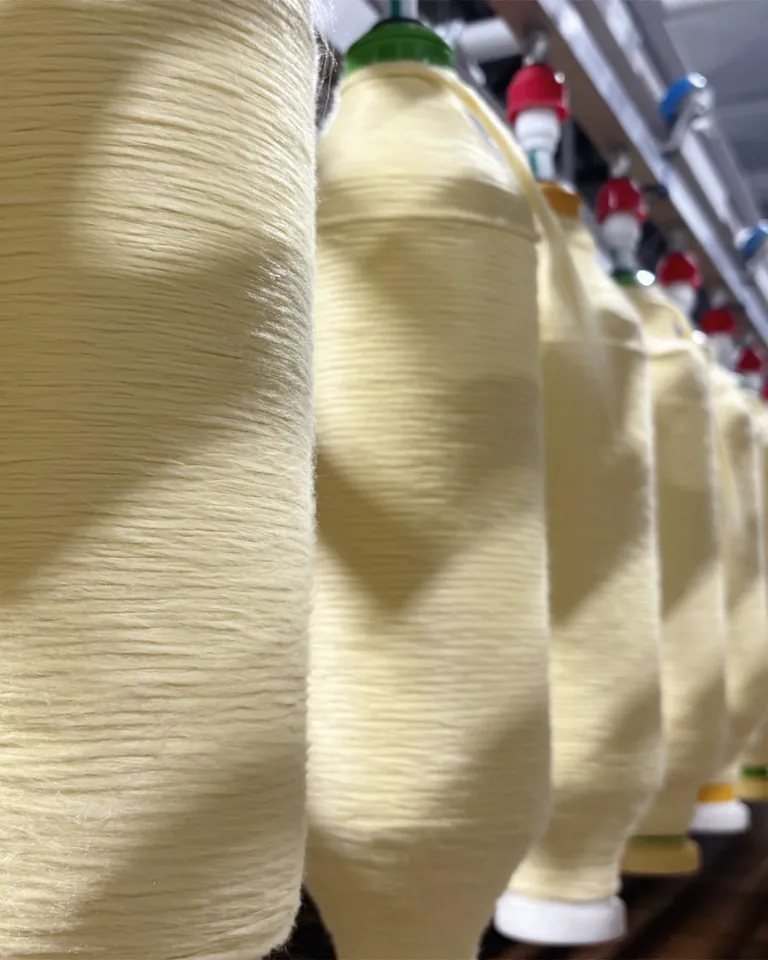
Spinning means turning fibres into yarns for knitting and weaving. Régitex has been a Quebec yarn manufacturer since 1998. We master ring spinning, open-end spinning and colour blending using pre-dyed fibres. Our core business: yarns for knitted and woven fabrics, custom-designed for each technical application.
1998
Yarn manufacturer since 1998
65
People at Régitex
2
Spinning processes: ring and open-end
2,000 lb
Orders from 2,000 lb
24
Quote within 24 business hours
Processes and equipment
Our processes
Ring spinning is Régitex’s core business, developed since 1998. Open-end spinning complements it for projects where productivity and volume come first.
Ring spun
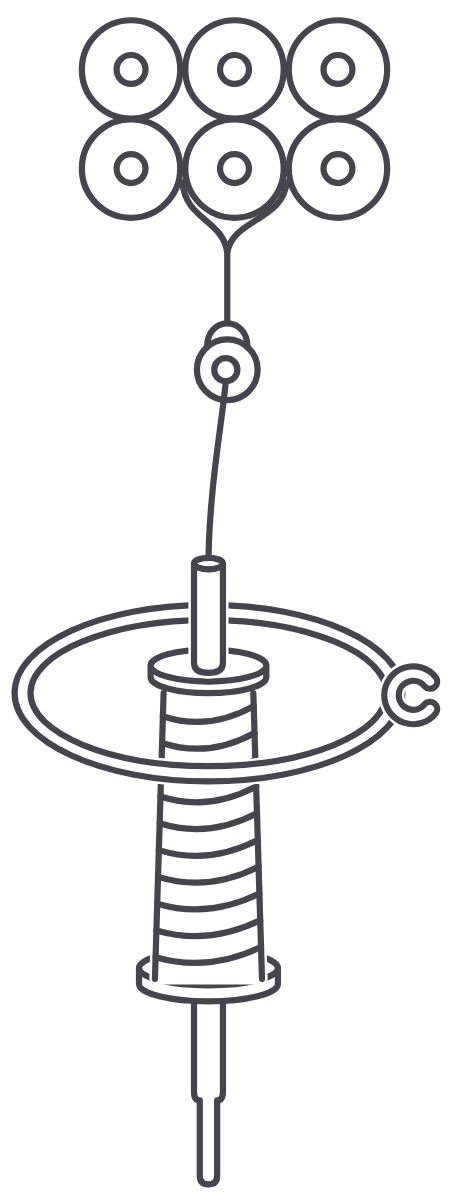
Ring spinning
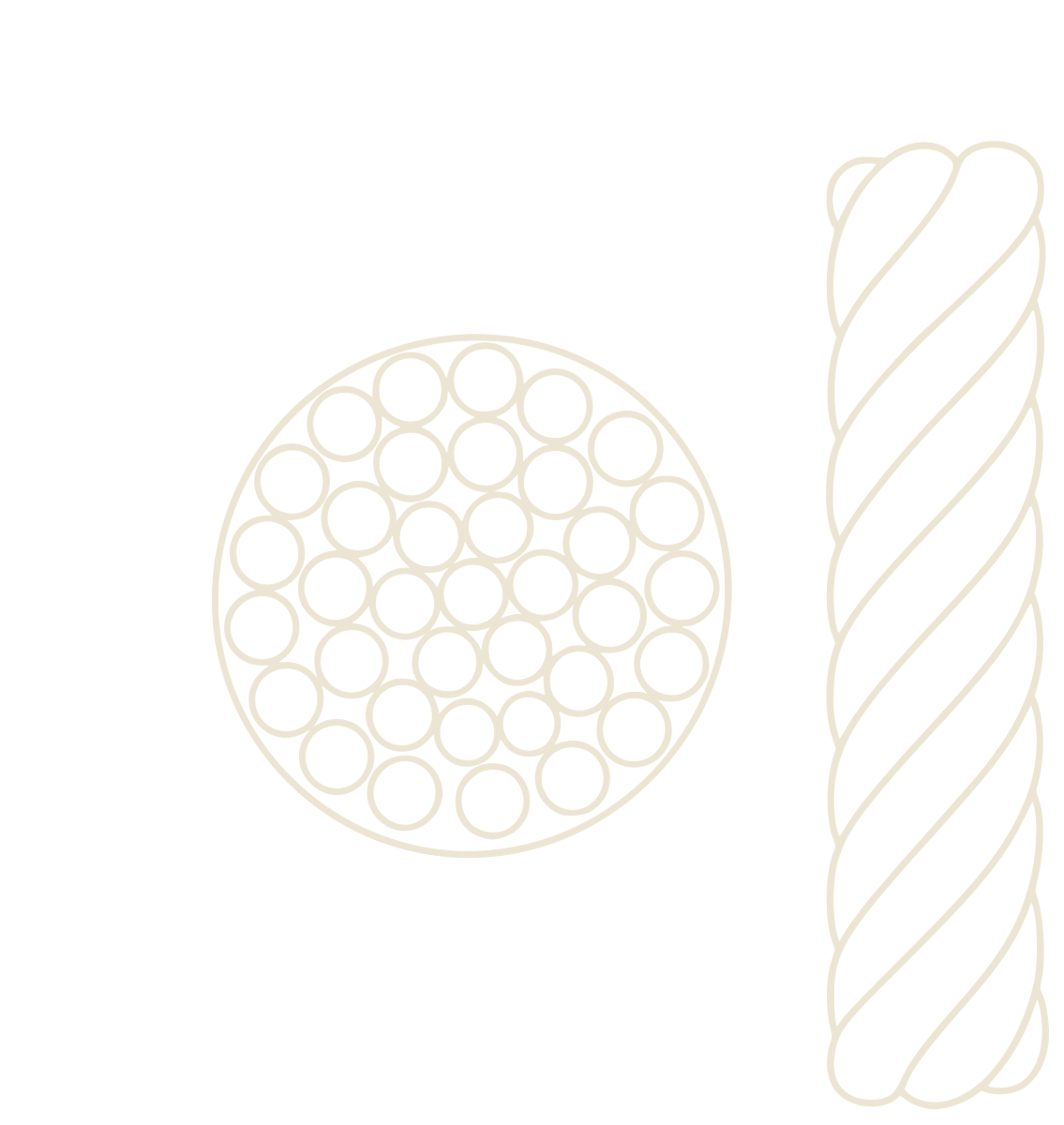
The roving is drawn out and then twisted around a ring, in one continuous motion. The twist holds the fibres tightly against one another along the whole length of the yarn: excellent strength, very fine yarns possible, better mechanical and aesthetic properties, suited to high-quality textiles. On the other hand, production speed is lower, investment and production costs are higher, and the process takes longer.
Excellent strength
Very fine yarns possible
Superior quality and fineness
Slower, more costly production
Open-end spinning
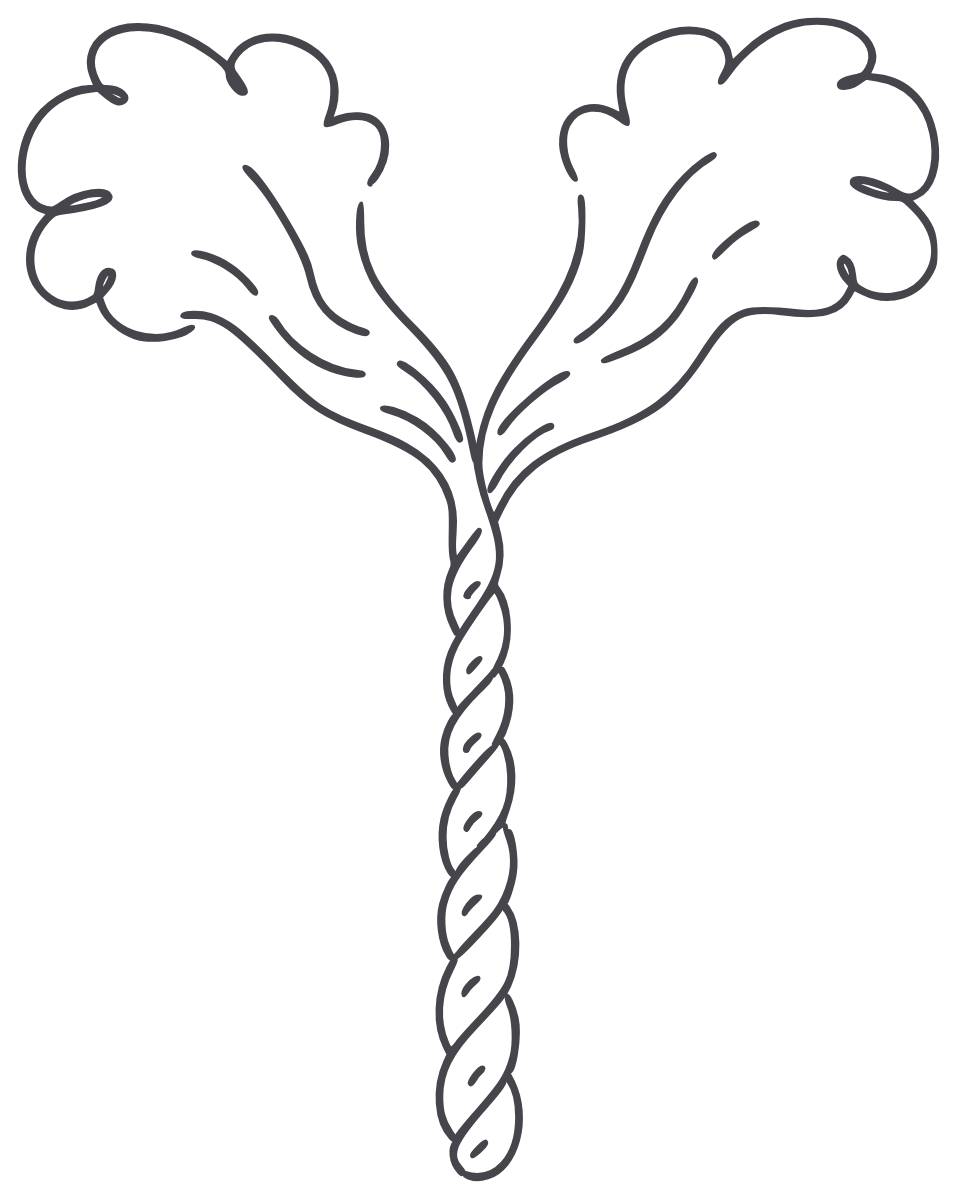
Open-end
The fibres are separated from one another, then brought together and twisted in a rotor. The yarn forms continuously, without going through the roving stage: very high productivity, fewer preparation stages, lower manufacturing cost, fewer yarn breaks, a less hairy and bulkier yarn. On the other hand, mechanical strength is lower, very fine yarns are difficult to produce, and the appearance suits lower-end fabrics.
Very high productivity
Lower manufacturing cost
Bulkier yarn
Lower mechanical strength
In short: ring spinning, our main area of expertise, gives superior quality, fineness and strength; open-end spinning complements it where productivity and lower cost come first.
These processes are part of our decarbonization plan: by 2030, a combined effort with Énergir aims to reduce natural gas consumption tied to our operations by 39% (Scopes 1 and 2 of the GHG inventory, whose methodology was reviewed by CCG Climat).
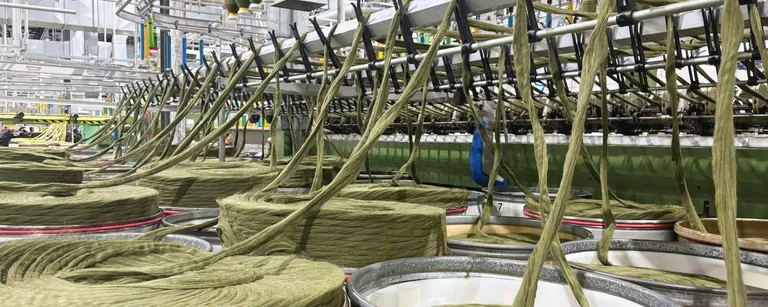
The ten stages of production
-
Receiving
Fibres arrive in bales and are inspected before entering production.
-
Opening and blending
The bales are opened and the fibres blended in the desired proportions, colour included.
-
Carding
Cards remove impurities and align the fibres, a stage that sets the quality standard for the lot.
-
Drawing
Several slivers are combined and drawn to even out the material.
-
Roving frame
The sliver is thinned and receives a first light twist: the roving.
-
Spinning
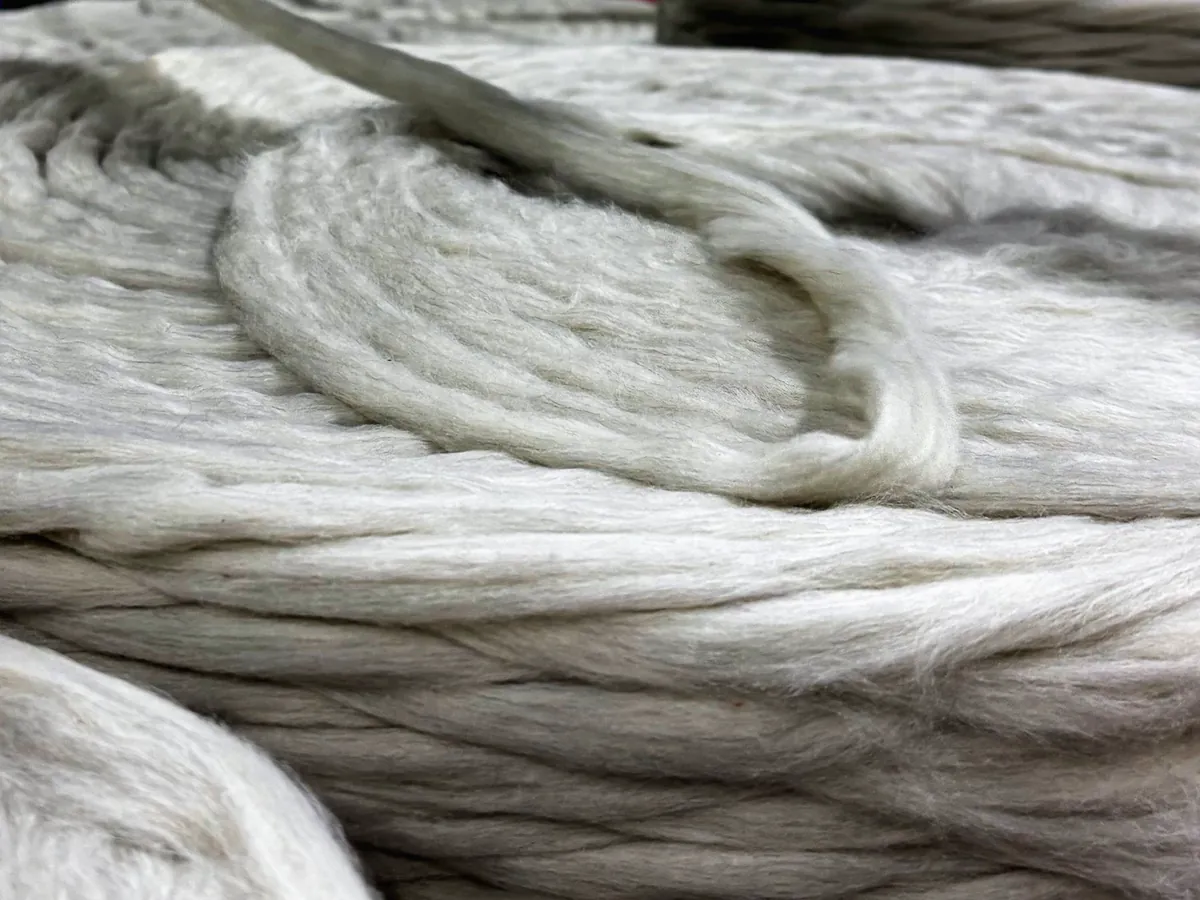
The roving is spun by ring or open-end spinning, depending on the process selected.
-
Rewinding
The winder makes the final assembly and puts the yarn back onto large-format cones.
-
Plying
For a plied yarn, several single strands are assembled and twisted together.
-
Steaming
The steamer smooths the fibre and removes static electricity from the yarn.
-
Shipping
Cones are inspected, packed and shipped according to customer requirements.
Fibres dyed upstream
Colour blending
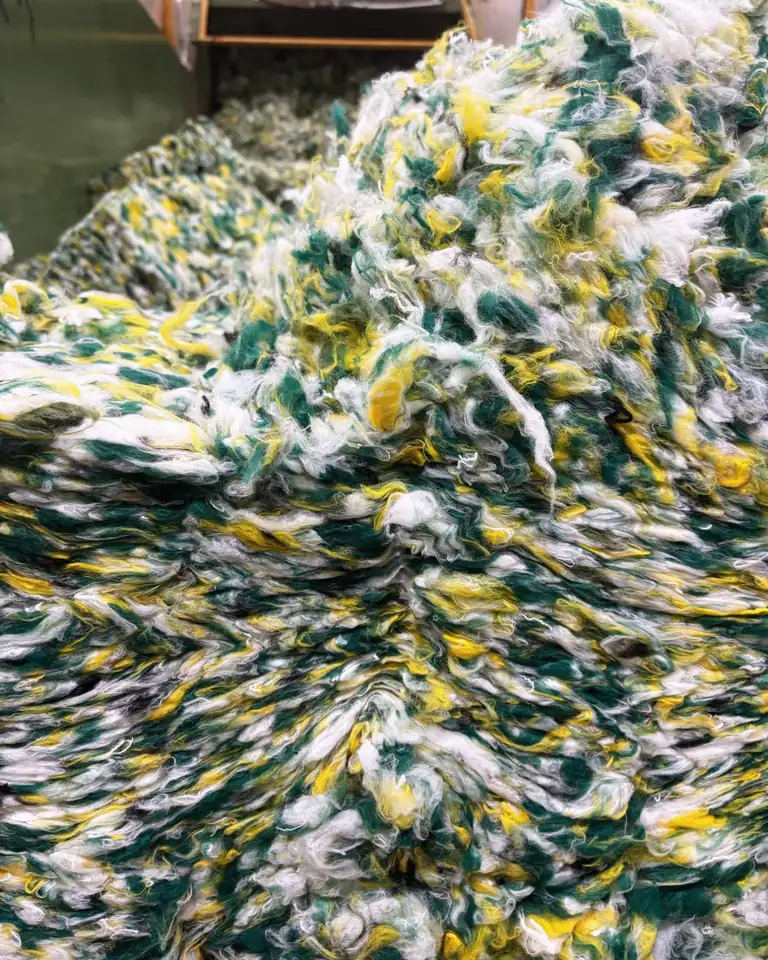
Régitex usually does not dye its fibres: it builds each shade by blending fibres that are already dyed, in precise proportions, from the opening and blending stage. The colour is stable from lot to lot, wash-resistant and uniform in cross-section. This process applies to the protective and furnishing markets.
- Colour consistency from lot to lot
- Resistance to industrial wash cycles
- Custom-blended shades
- Colour built into the material, not applied to the surface
Materials we spin
The fibres we work with
Natural
Cotton, wool, breathability, softness.
Synthetic
Polyester, nylon, aramids. High mechanical and thermal resistance.
Artificial
Viscose, modal and artificial fibres. Lightness, comfort and functional properties.
Recycled
Pre- or post-consumer recycled fibres, evaluated according to project requirements, including recycled flame-resistant fibres.
The technical parameters of each fibre family are detailed in technical information. Fibre accounts for the largest share of a yarn’s carbon footprint: the calculation is explained in sustainability.
Quality and custom yarns
Quality control
Spun in Quebec
Analysis service
We analyze yarns and materials to validate how they will behave before a production run begins.
Custom yarn
Spun to your exact technical specifications: yarn size, fibre, colour.
Fast quote
Our sales team responds to any quote request within 24 business hours.
Orders, colour and quality
What is the minimum quantity for a yarn order?
For regular production, the minimum order is 2,000 lb. Each production run is made to order. Development projects run in smaller lots.
How do we get the same colour from lot to lot?
For us, a colour is a recipe. Our teams assemble fibres of different shades at the opening and blending stage, in precise proportions, until the requested shade is reached.
What is solution dyeing?
Solution dyeing works the dye into the fibre as it is produced, before it is spun. The colour becomes part of the yarn’s material instead of being applied to its surface once the yarn is formed.
We start with fibres that are already coloured, most of them dyed this way, and then build the shade by blending, before spinning.
Are our yarns NFPA or OEKO-TEX certified?
Our yarns are not directly certified, since certifications are usually awarded to the fabrics or finished garments made by our customers.
They can, however, be designed to meet the requirements of many recognized industry standards, including NFPA, ASTM, ISO, OEKO-TEX, BNQ, CATCC, AATCC and EN. Manufacturing tolerances are detailed on the Technical information page.
How do we control quality?
Quality control does not happen only at the end of the line. It is spread across the ten stages described above. At the end of the process, cone winding gets particular care: a poorly wound cone means machine stoppages on your side.
Your machine settings. Our team advises your operators on the machine settings that suit our yarns.
This know-how is also passed on: training the next generation of workers through work-study and welcoming young people to the plant.
Let’s talk about your yarn
You have just read how we work. Now describe your application, your standard and your volume: our technical team will get back to you with a quote.