
Military textiles Strength and protection
Technical yarns for military uniforms
and gear
Quote within 24 business hours
A flame-resistant combat uniform, technical underwear and a pair of gloves are not used for the same purpose, but one constraint applies to all of them: standing up to intensive use in the field, sometimes in contact with flame. Régitex spins the yarns that go into these military textiles in Saint-Joseph-de-Beauce, Quebec, for weaving and knitting companies.
Quote within 24 business hours · Orders from 2,000 lb · Spun in Quebec since 1998
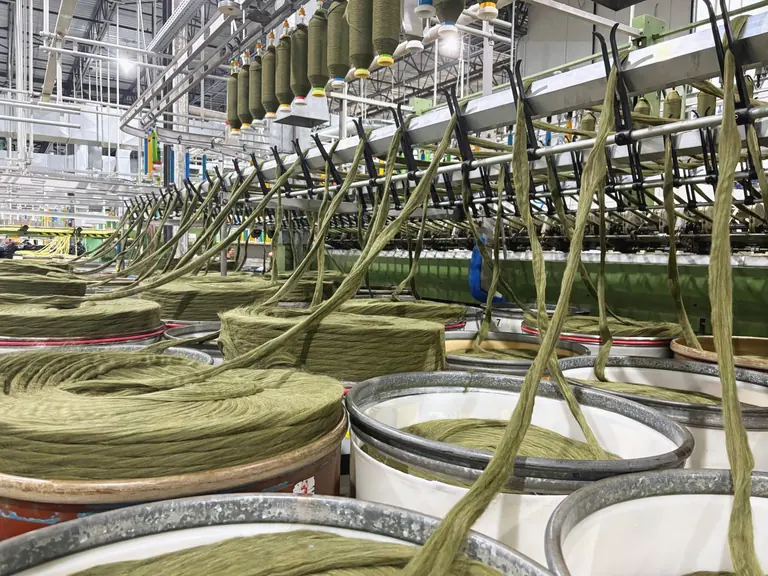
Which military gear uses Régitex yarns?
Régitex spins for the following military segments. As in all its markets, its customers are weaving and knitting companies: the finished garment or gear can carry their brand, and Régitex yarn makes up the material that has to hold up in the field.
Combat uniforms
Yarns for flame-resistant combat uniforms, designed to withstand flame and intensive use.
Technical underwear
Yarns for underwear worn under the uniform, flame-resistant or moisture-managing, for comfort day to day and in high-risk situations.
Hoods
Yarns for protective hoods, in direct contact with the face and neck.
Gloves
Yarns for military gloves, subject to repeated handling and friction.
Socks
Yarns for technical socks, which have to combine wear resistance and comfort over long periods.
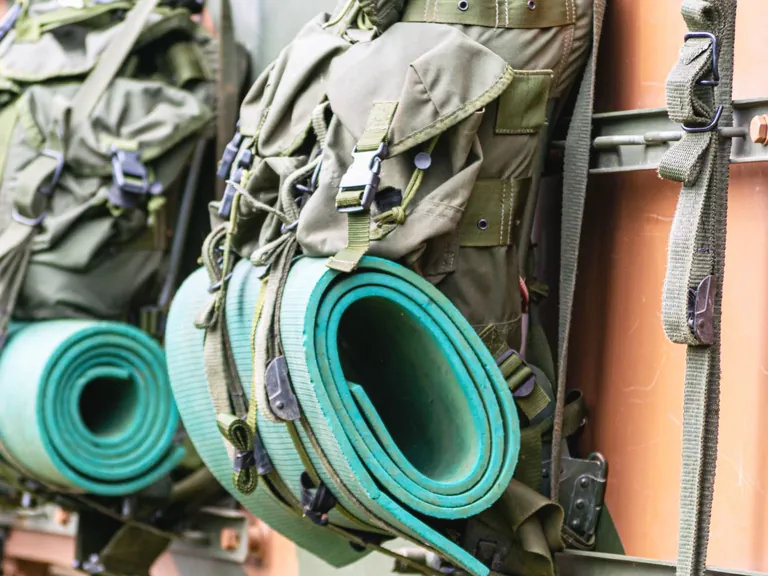
What properties does a military yarn have to hold?
A combat uniform has to resist abrasion, cuts, moisture and, for some pieces, flame. These properties depend first on the choice of fibre and blend, then on the manufacturing process.
Spinning is done in two ways: ring spinning (ring spun) and open-end spinning (open-end). Yarns come out single or plied, with 2 to 4 plies. The process is chosen with your teams, based on the stress the finished piece has to take. The twist is set by Régitex.
Compare the two spinning processes
Standards. Across all markets combined, Régitex yarns can be designed to meet the requirements of many recognized industry standards, including NFPA, ASTM, ISO, OEKO-TEX, BNQ, CATCC, AATCC and EN. The yarns are not certified directly, since certifications are usually awarded to the fabrics or finished garments made by Régitex’s customers.
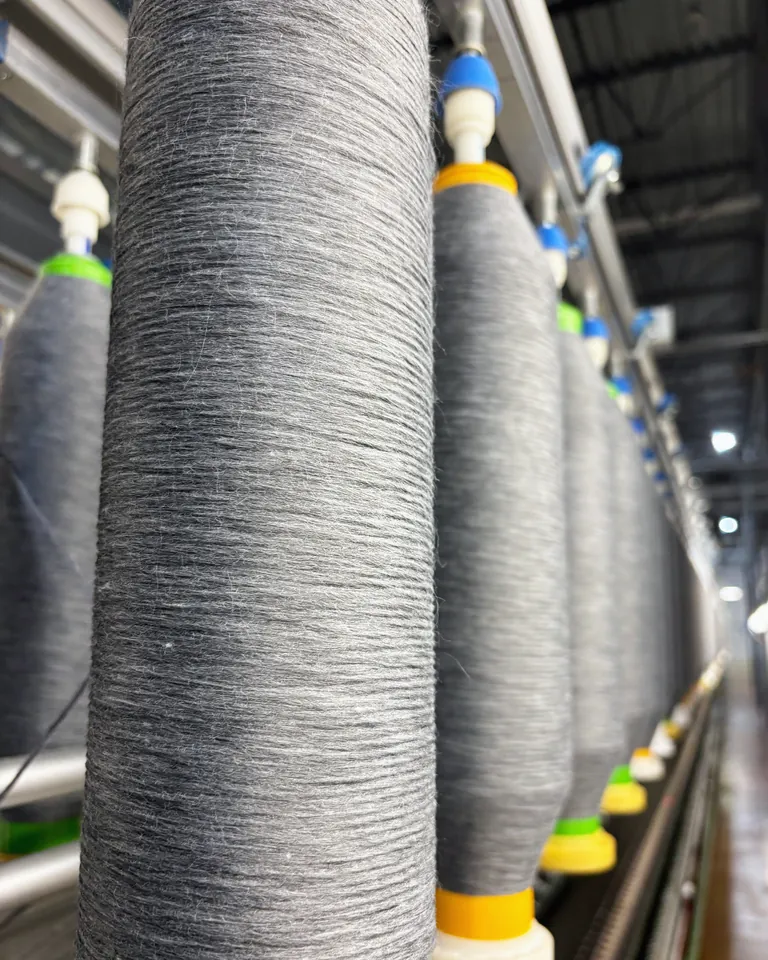
Colour, analysis and the threshold
Colour blending in-house. Most of our coloured yarns are spun from solution-dyed fibres: the dye is built into the fibre as it is produced, rather than applied to its surface afterward. We then achieve the requested shade by blending these coloured fibres.
The analysis service. Before production, our analysis service checks the fibres and yarns intended for your program. Our team also advises your operators on their machine settings.
Custom, from 2,000 lb. Our orders start at 2,000 lb: enough to test a new material or a new colour without committing to a full production run.
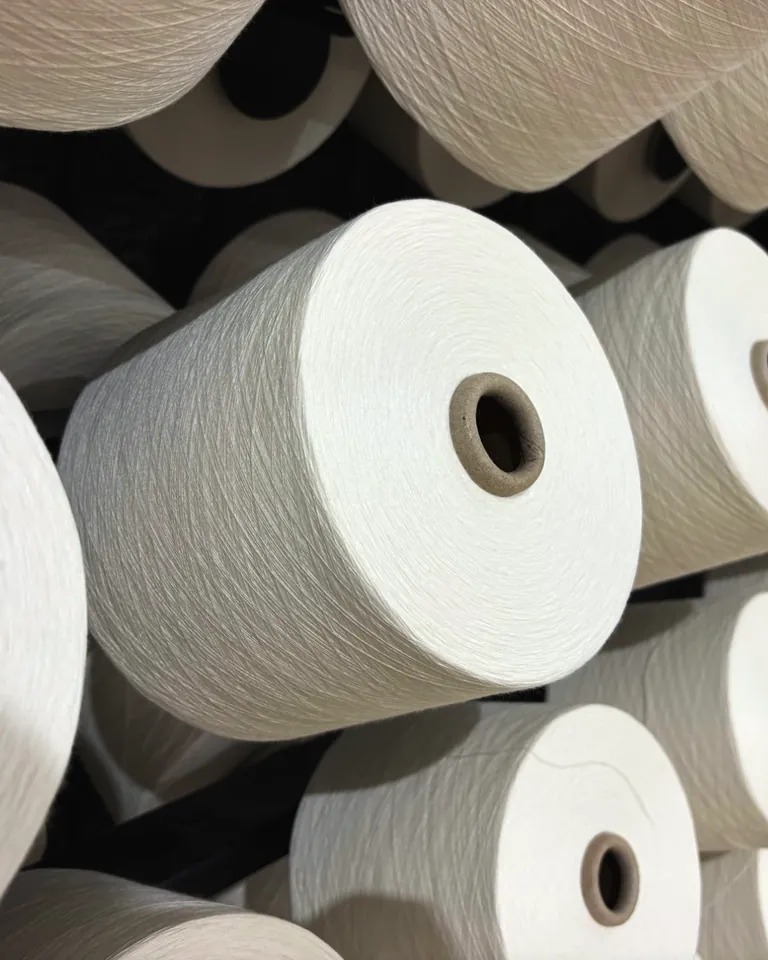
Military yarns, in brief
Are Régitex yarns certified for military use?
Not directly: certifications are usually granted to the finished fabrics and gear, which our customers have qualified themselves. Our role is to give them a yarn suited to the requirements of the standards they are targeting, made from fibres that are analyzed before production.
Our markets
Protective textiles
Industrial textiles
Furnishing and apparel
Medical textiles
Military textiles
Get a military yarn quoted
Specify the target fibre or blend, the yarn size (count), the colour and the volume. Your quote comes back within 24 business hours. Your specification isn’t final yet? Describe the intended use, the one that has to hold up under effort or in front of flame, and the technical team takes it from there.