
Industrial textiles Performance Robustness
Technical yarns for
industrial applications
Quote within 24 business hours
Our industrial expertise
In industrial use, a textile is a piece of equipment. An industrial fabric stays outdoors in all weather, a filter medium runs continuously, and the part lasts as long as its weakest yarn.
In Saint-Joseph-de-Beauce, Quebec, Régitex makes the raw material for these applications: yarns for dry filtration, technical fabrics and thermal protection against flame and cuts. Its customers are weaving and knitting companies, and their requirements become Régitex’s own.
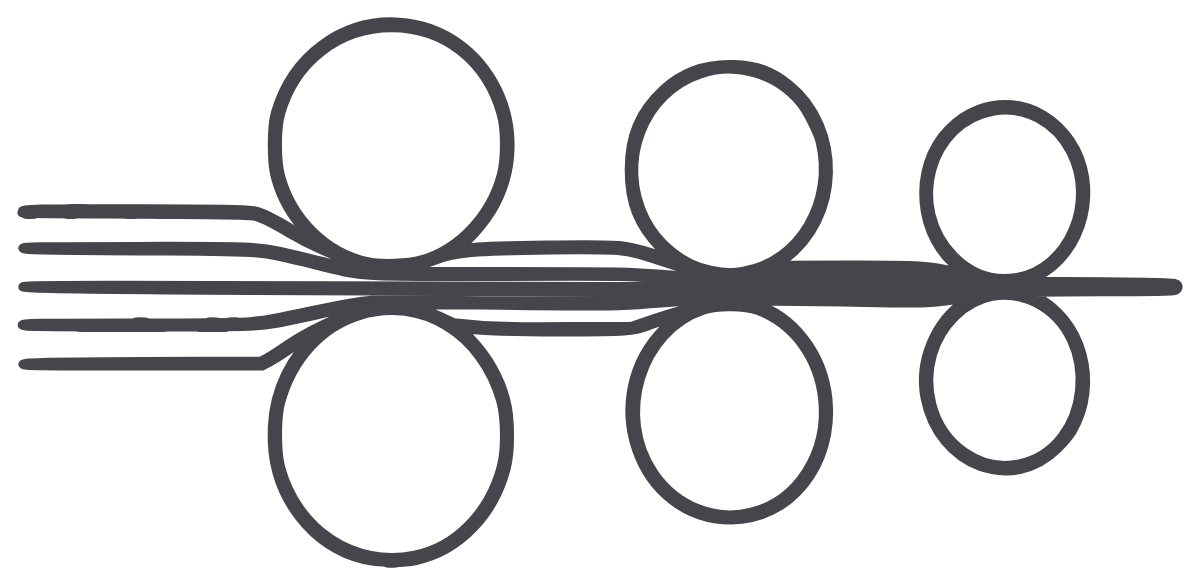
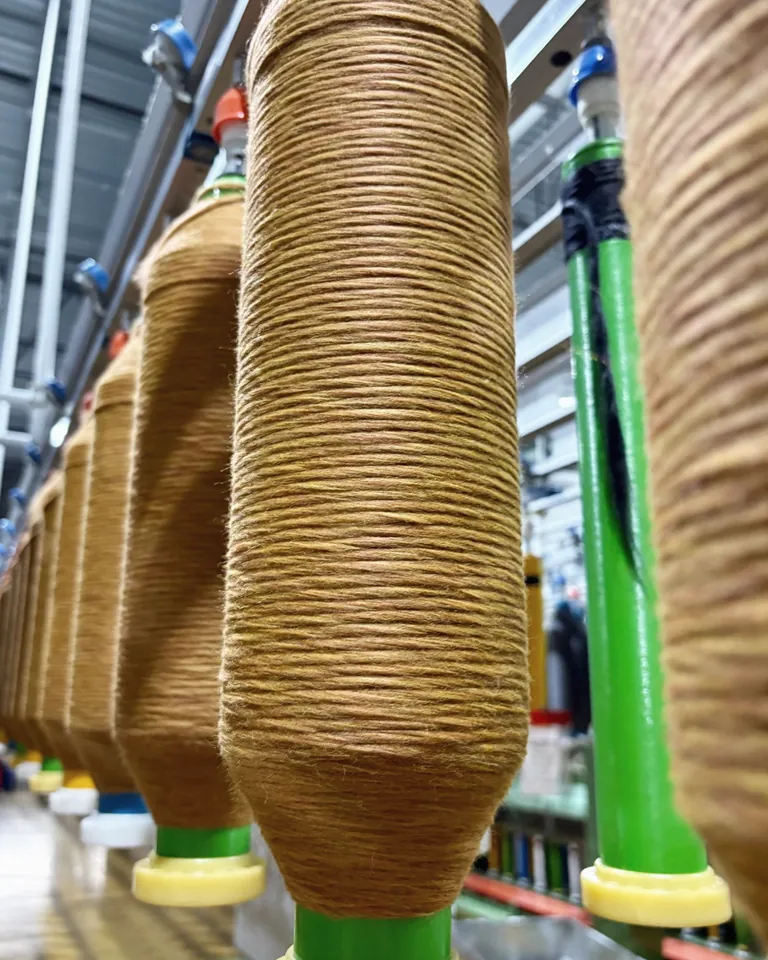
Two processes coexist under the same roof: ring spinning (ring spun), Régitex’s main area of expertise, and open-end spinning (open-end).
Quote within 24 business hours · Orders from 2,000 lb · Spun in Quebec since 1998
Sectors served
Which industrial applications do these yarns serve?
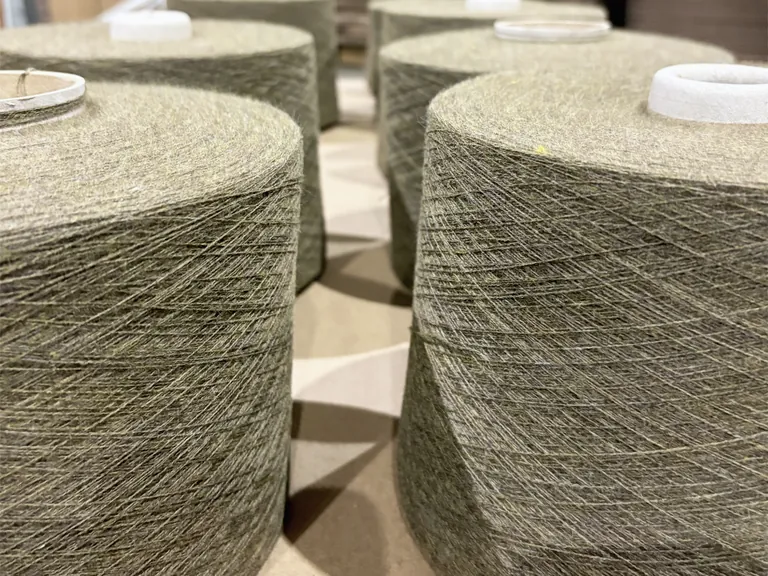
Dry filtration
Air filters that capture solid particles, dust and fumes.
Industrial fabrics
Industrial fabrics exposed to weather, UV and repeated handling.
Thermal protection, flame and cut resistance
Gloves, protective clothing, technical underwear and ropes that have to withstand heat, flame and cuts.
Three uses where the yarn works continuously, under stress.
Dry filtration. Air filtration passes a stream of air through a filter medium to capture solid particles, dust, pollen, fumes or other airborne contaminants, to improve air quality and protect equipment or people. As the filter captures dust and particles, its pores gradually clog, which increases resistance to airflow: airflow drops, the energy consumption of the fans rises, and the performance of the ventilation or dust collection system degrades. The filter is considered to have reached the end of its life when the pressure drop reaches the maximum value recommended by the manufacturer or set by process requirements.
Technical performance
Which properties does an industrial yarn have to maintain?
Materials. The three fibre families Régitex makes its yarns from are described in detail on the Technical information page. Depending on the application, recycled fibres from specialized suppliers can be added to the blend; we set the proportion with you, case by case.
On the construction side, we use two spinning processes, ring and open-end. Our yarns are offered single or plied, with 2 to 4 plies. The number of plies is defined with your teams, based on the stresses the finished part will have to withstand. The twist is set by Régitex.
Colour is determined at the fibre stage. Most of our coloured yarns are spun from solution-dyed fibres: the dye is incorporated into the fibre as it is made, rather than applied to its surface afterward.
Spinning for industry
Have you already spun recycled fibres for industry?
Yes. Our first research and development project in ecodesign, in 2015, aimed to repurpose work coveralls from the oil industry. It combined pre- and post-consumer fibres, which let us clearly establish the difference in behaviour between the two. Trials were run on both of our processes, open-end and ring, and ring spinning was chosen.
Can you provide test values for your yarns?
No. Performance values are measured by our customers on their fabrics, not on the yarn, so we do not have them on hand. Our technical data sheets are confidential and are not published.
Our markets
Protective textiles
Industrial textiles
Furnishing and apparel
Medical textiles
Military textiles
What stress does your part have to withstand? Start there.
Tell us what it is, along with the target fibre or blend, the yarn size, the colour and the volume. If the specification is not settled, describe the end application and the technical team takes over.